UN humanitarians appeal for $4.2 billion to assist the most vulnerable
24 February 2024 - The war in Ukraine continues to inflict immeasurable human suffering, death and destruction, putting millions at risk of serious violations and generating grave humanitarian needs.
Thousands of people have been killed, injured, or maimed, including hundreds of children. This is the gravest armed conflict in Europe since the Second World War.
Throughout 2023, fighting and hostilities continued to ravage parts of Ukraine and cause massive damage to civilian infrastructure - homes, schools, hospitals, and water, gas and power systems are repeatedly hit and, in some cases, directly targeted.
This compounded the widespread destruction that had already decimated essential services across the country, particularly in the east, where people have now endured 10 years of war, caused by Russia’s invasion.
In 2023, the UN Office for the Coordination of Humanitarian Affairs (OCHA) along with its partners assisted 11 million men, women and children with water and hygiene supplies, materials to repair homes, health or education services, food, cash assistance, as well as counselling, legal aid and demining.
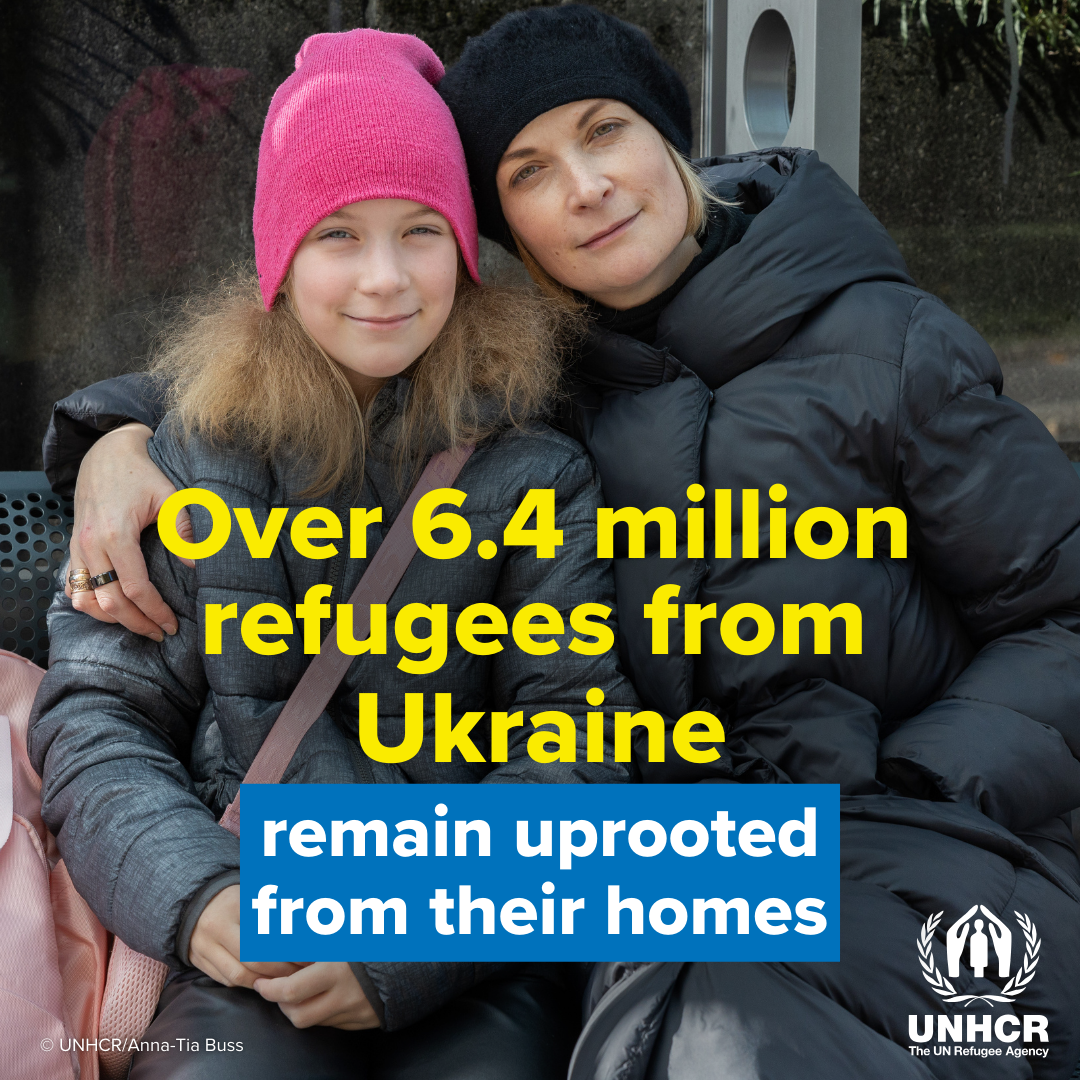
The war has forced millions to flee and nearly 4 million people – including nearly 1 million children – are still internally displaced across Ukraine. There are around 6 million Ukrainian refugees in Europe including around 274,000 in Austria, Hungary, Slovakia and Slovenia. Prolonged displacement has pushed many to the brink, as they depleted their resources and capacity to cope with loss of job or income.
Over 14.6 million people – about 40 per cent of the Ukrainian population – will need humanitarian assistance in 2024. The UN-led response aims to reach about 8.5 million people with assistance.
At the same time, we need to invest in Ukraine’s recovery and reconstruction. In 2023, the United Nations, hand in hand with the Government of Ukraine, local authorities, communities and others, scaled up its recovery work. We are helping communities to remove debris and demine, reconstruct housing and social infrastructure, provide mental health and psycho-social care, support livelihoods and employment and more.

"Land of Silence” is a documentary short film about humanitarian demining and mine action in Ukraine. The film aims to draw attention to the problem of contamination of Ukrainian territory with mines and other explosive ordnance through the personal stories of people involved in mine action, who daily work to make Ukrainian lands safe again. It also seeks to demonstrate the impact of demining on the lives of Ukrainians and emphasize the importance of joint efforts and international support for demining initiatives.
Four years since Russia’s full-scale invasion of Ukraine, and 12 years since the illegal annexation of the Autonomous Republic of Crimea and City of Sevastopopl, the war continues to inflict untold suffering on the Ukrainian people.
The Food and Agriculture Organization of the United Nations (FAO) has published its Emergency and Early Recovery Response Plan for Ukraine for 2026–2028, outlining priority actions to protect agricultural livelihoods, restore productive capacity and support Ukraine’s agrifood sector.
The latest Russian strikes reportedly damaged 12 buildings in the capital, causing widespread damage to homes, businesses and key services, while phones have been heard ringing from the rubble.